

Get the latest research to your inbox
Craik Group
Group Leader
Professor David Craik
UQ Laureate Fellow - GLInstitute for Molecular BioscienceResearcher profile is public:1Supervisor:Researcher biography:David Craik (AO, FRS, FAA) is in the Centre for Chemistry and Drug Discovery at the Institute for Molecular Bioscience, The University of Queensland, Australia. He discovered the cyclotide family of circular proteins and has characterized the structures of many animal toxins including conotoxins from cone snail venoms. He heads a research team of 35 researchers whose current work focuses on applications of circular proteins, drugs in plants, toxins and NMR in drug design.
He is author of over 810 scientific papers, including 14 in Nature publications (Nature/Nature Communications/Nature Neuoroscience/Nature Structural Biology/Nature Chemical Biology/Nature Chemistry/Scientific Reports/Nature Protocols, 1 in Science, 12 in PNAS, 9 in JACS, 3 in Chemical Reviews, and 16 in Angewandte Chemie. He has been elected as a Fellow of the Royal Society and a Fellow of the Australian Academy of Science, appointed as an Officer (AO) of the Order of Australia and has received numerous awards for his research, including the Ralph F. Hirschmann Award from the American Chemical Society (2011), Ramaciotti Medal for Excellence in Biomedical Research (2014), GlaxoSmithKline Award for Research Excellence (2014), the Vincent du Vigneaud Award from the American Peptide Society (2015),the FAOBMB Award for Research Excellence (2015) and the Cathay Award from the Chinese Peptide Society (2018). He received the Australian Academy of Science David Craig Medal in 2023. He is an Honorary Professor of Jinan University, Guangzhou and has an Honorary Doctorate from Kalmar University in Sweden.
Biography
David Craik obtained his PhD in organic chemistry from La Trobe University in Melbourne, Australia and undertook postdoctoral studies at Florida State and Syracuse Universities before taking up a lectureship at the Victorian College of Pharmacy in 1983. He was appointed Professor of Medicinal Chemistry and Head of School in 1988. He moved to University of Queensland in 1995 to set up a new biomolecular NMR, held an Australian Research Council Laureate Fellow (2015-2020) and is currently a NHMRC Fellow, as well as Director of the Australian Research Council Centre of Excellence in Peptide and Protein Science.
Key Discoveries
David Craik has made discoveries of new classes of proteins, generated new knowledge on their structure and function, and used this information to design and chemically re-engineer new classes of protein-based drug leads and agricultural pest control agents. In particular, his major achievements are:
- the discovery of cyclotides, the largest known family of circular proteins. As well as a circular backbone, cyclotides contain a knotted arrangement of cross-linking disulfide bonds, making them remarkably stable. His discovery of these proteins was sparked in part from anecdotal reports of medicinal practices in Africa where women make a tea from the plant Oldenlandia affinis by boiling it in water and sipping it during labour to accelerate child birth. He determined the structure of the bioactive component of this medicinal tea and found that it had an unprecedented head-to-tail cyclic peptide backbone combined with a cystine knot.
- the first structural and functional characterizations of prototypic circular proteins in higher organisms - Professor Craik was one of the first to recognize that other families of ribosomally synthesized cyclic peptides exist. As examples from bacteria and animals emerged, Professor Craik was at the forefront of their structural characterization, reporting the first structures of theta-defensins from animals and the threaded lasso peptide microcin J25 from bacteria, as well as new examples of cyclic peptides from plants.
- the development of artificially cyclized peptide toxins as drug leads – he developed an orally active peptide that is 100 times more potent than the leading clinically used drug for neuropathic pain.
Research Training
Professor Craik has trained more than 70 PhD students. He was awarded UQ's Research Supervision Excellence Award in 2007 on the basis of his mentoring and innovations in postgraduate training, including his "writing retreats" to mentor students and postdocs on science writing skills. He received the Institute for Molecular Bioscience Individual Leadership Award in 2019. He was awarded an honorary doctorate from Kalmar University, Sweden for his contributions to international student exchange programs, and is an Honorary Professor of Jinan University, Guangzhou.
Professional Activities
Professor Craik founded and chaired the 1st, 2nd and 3rd International Conferences on Circular Proteins (2009, 2012 and 2015) and was on the Scientific Program Committee for ISMAR 2021. He is on the Boards of six international journals, including Angewandte Chemie, ACS Chemical Biology, Chemical Biology and Drug Design, and ChemBioChem. He was on the Council of the American Peptide Society (2015-2021). He was the director two Brisbane-based biotech companies. He is on the Scientific Advisory Boards of James Cook University's Centre for Biodiscovery and Molecular Development of Therapeutics (BMDT), the University of Wollongong's Illawara Health and Medical Research Institute (IHMRI) and Enzytag. He conceived and supports two publicly accessible databases - Cybase on circular proteins (www.cybase.org.au), and conotoxins (www.conoserver.org).
Body:Highlights
Professor David Craik is a structural biologist who travels the world discovering new molecules in plants and animals. His area of expertise is peptides (mini-proteins). He is looking for peptides that could be effective treatments for a range of diseases or have useful applications as environmentally friendly agri-chemicals. He particularly likes to discover something in nature and then use molecular design to improve on it.
Professor Craik is best known for discovering a family of peptides with a unique circular structure, which he aptly named cyclotides. Cyclotides are super stable, which makes them desirable as drug leads. By re-engineering the structure of other peptides to mimic cyclotides, he is making potent and specific peptides orally active – creating the perfect drug. He is known internationally as the founder of this field of research.
He was the first person to take a peptide from a cone snail, a natural conotoxin, and re-engineer its structure to make it cyclic. By improving the strength of the molecule, he created a natural painkiller 100 times stronger than the current market leader gabapentin, and potentially with lower side effects. The drug is currently showing great promise in animal trials. This natural painkiller is the first time an orally active drug has resulted from an animal venom. In other applications Professor Craik’s methodology led to the commercialisation of an environmentally friendly insecticide.
Professor Craik is known internationally for his work in peptide-based drug design and sought after as a conference speaker on the topic.
Video
Connect


Researchers
Dr Sonia Troeira Henriques
IMB FellowAdjunct Associate ProfessorInstitute for Molecular BioscienceResearcher profile is public:0Supervisor:Body:Highlights
Dr Sónia Henriques research is focused on ‘breaching cell membranes with cell penetrating peptides’. This relates to the use of cyclic cell penetrating peptides to cross cell membranes. Cyclic cell penetrating peptides can be used as carriers to deliver macromolecules inside cells. We are applying this approach in three ways. Firstly, to design a new generation of drugs against intracellular targets to treat cancer. Secondly, to optimise peptides to treat infectious diseases caused by bacteria. Finally, as research tools to modulate functions within microorganisms (e.g. bacteria, algae).
Dr Henriques combines expertise on cyclic disulfide-rich peptides, cell-penetrating peptides, antimicrobial peptides, and membrane biology. She has a strong background in biophysical methodologies to characterise peptide-membrane interactions. Her research activities involve biophysical studies (e.g. surface plasmon resonance, flow cytometry and fluorescence spectroscopy) with model membranes to identify the membrane properties that modulate peptide bioactivity, and correlating them with studies with cells.
Dr Henriques graduated in Biochemistry (2004) and obtained a PhD degree in Molecular Biophysics (2008) from University of Lisbon in Portugal. In 2008 she was awarded an ARC Australian Postdoctoral Fellowship and started her postdoctoral research at UQ's Institute for Molecular Bioscience (IMB). In 2009, Dr Henriques was awarded a Marie Curie Fellowship and was appointed as invited lecturer in Portugal (Medicine School, University of Lisbon). Dr Henriques returned to IMB in 2012 on reception of an ARC DECRA and she was awarded an ARC Future Fellowship in 2015. She has conducted research in international and national universities including Université Libre de Brussels in Belgium, University of Southern Denmark, and the University of California Santa Barbara in USA.
Research projects
Development of novel anticancer drugs able to target and switch off cancer cells
Cancer is responsible for about three of every ten deaths and is the leading cause of disease burden in Australia. This is largely because conventional chemotherapeutic agents have low specificity for tumour cells, high toxicity for healthy cells and susceptibility to the development of resistance. Thus, there is a need for more effective cancer treatments that are tailored for a specific cancer and are not toxic to healthy cells. As each type of cancer is unique and results from alterations in intracellular pathways, inhibition of specific protein-protein interactions involved in the development of a certain type of cancer is a potential strategy to design safer cancer therapeutics. We are developing peptide-based therapeutics to target and deliver tailored drugs able to cross the cell membrane of tumour cells and specifically inhibit cancer pathways involved in breast cancer, leukaemia and melanoma. From the inside, we can deactivate cancer cells and stop these cancers from growing and spreading, without affecting healthy organs.
Breaching membrane barriers to modulate intracellular pathways
Cell membranes are barriers that control what can get inside cells. The ability to cross these barriers and deliver biological macromolecules, such as biomarkers, therapeutics and research tools, inside cells has endless opportunities that can be used to modulate cell’s activity. We are working on the development of novel molecular transporters to deliver macromolecules inside cells/microorganisms with therapeutic and biotechnological relevance. This technology is based on the use of stable cyclic peptides to deliver genes, proteins, probes or biomarkers into distinct cell types (e.g. cancer cells, bacteria, algae). We are specifically interested in the use of cell-penetrating peptides to target and monitor cancer biomarkers and to deliver nucleic acids inside model organisms with cell wall (e.g. bacteria, algae) to improve their potential as biofactories to produce therapeutics and biofuel.
Host-defence peptides to treat cancer and infectious diseases
Host-defence peptides are produced by our innate immune system and are expressed in response to fungal and bacterial infections and some have been shown to be able to kill tumour cells. We are interested in designing more selective and potent anticancer and antimicrobial drugs using host defence peptides. This will be achieved by unravelling the mode-of-action and identifying the features responsible for the anticancer and antimicrobial properties of host-defence peptides. We are particularly interested in redesigning host defence peptides to confer to them ability to selectively target breast cancer, blood tumours, metastatic circulating cells, or multi-resistant Staphylococcus aureus (MRSA) infections.
Partners and collaborators
Collaborators and partners include:
- Professor David Craik (IMB, UQ)
- Professor Mibel Aguilar (Monash University)
- Professor Frances Separovic (University of Melbourne)
- Dr Christina Schroeder (IMB, UQ)
- Professor Miguel Castanho (University of Lisbon, Portugal)
- Professor David Andreu (University Pompeu Fabra, Spain)
- Professor Luis Bagatolli (University of Southern Denmark, Denmark)
- Professor Patrick Daugherty (University of California Santa Barbara, USA)
- Professor Fabrice Homblé (Université Libre de Brussels, Belgium).
Engagement and impact
Dr Henriques is a biochemist/biophysicist. Her work in mechanistic studies of peptides and peptide-membrane interactions is highly multidisciplinary and places her research at the interface of chemistry, biochemistry, structural biology, membrane biology, biotechnology and medical research. She is the co-author of over 50 publications on cyclic peptides, drug design and/or the mechanism of action of peptides, and has presented >20 oral communications in international scientific conferences including invited talks in prestigious national and international conferences (e.g. Gordon Conference on antimicrobial peptides, Australian Biophysics Symposium).
Dr Henriques has participated in several outreach activities for non-scientific and community audiences. Recently she wrote a chapter for a children’s book to promote science among Portuguese-descendent children (6-12 years) living in the United Kingdom. This book was released in late 2016 in Portugal. Following her award to attend a Nobel Laureate meeting in Germany in 2014 she was given the opportunity to share her story with the community through the media. Her abstract submitted to 60th Biophysical Meeting in 2016 was selected by the American Institute of Physics and biophysical society journal editors as one that should be of great interest to reporters. As a proof of that, her work was featured in several international (e.g. UK, USA) news websites/online magazines, such as ABC news, Medical News Today, Tech times, International Business Times). She has presented a seminar “the Pharma revolution: growing medicinal drugs in your backyard” at the Global Leadership Series to UQ alumni and the community; her work on cell-penetrating peptides was featured in Chemistry World, a news magazine from the Royal Society of Chemistry.
Dr Henriques’ work is at the interface of fundamental and applied research, together with her team she is trying to create new knowledge in the field of peptide drug research and cancer cell biology, and in potentially developing better and safer therapeutics to treat blood, skin and breast cancers than traditional drugs. This research has the potential to create a new generation of targeted cancer treatments that would deliver many benefits to cancer patients and the community. Developing better therapeutics with fewer side effects could potentially reduce the healthcare costs associated with treating patients diagnosed with cancer.
Video
Discover more
Dr Angeline Chan
Research OfficerInstitute for Molecular BioscienceResearcher profile is public:1Supervisor:Dr Richard Kim
Chief Operating OfficerARC Centre of Excellence for Innovations in Peptide and Protein ScienceDeputy Director, ARC Centre of Excellence for Innovations in Peptide & Protein Science (CIPPS)Institute for Molecular BioscienceResearcher profile is public:0Supervisor:Associate Professor Conan Wang
ARC Future Fellow and Group LeaderInstitute for Molecular BioscienceResearcher profile is public:1Supervisor:Researcher biography:I lead the Technology-Driven Drug Discovery (Tech3D) Group at the Institute for Molecular Bioscience, UQ. We believe that the key to solving some of our world's biggest challenges, whether that be in medicine or agriculture, relies on the ability to precision engineer molecules at will. My group harnesses three technological pillars to engineer peptides and proteins, which are computational biology, molecular libraries, and nanotechnology. We aspire to design better drugs, creating next generation biotechnological agents that have real impact. These could be new cancer drugs that harness the body's immune system or new insecticides that are environmentally friendly. In these pursuits, we value advancement, fun, balance, respect, fairness, and integrity.
I have been involved in peptide and protein research for over two decades, and am highly experienced in bioinformatics, chemistry, structural characterization, biophysics, and biochemistry. I trained with experts in peptide and protein characterization: an Honours project with Professor Garry King at the University of New South Wales, Sydney, Australia (2004), an APA scholarship with Professor David Craik at the University of Queensland Institute for Molecular Bioscience, Brisbane, Australia (2005-2009) and a NHMRC fellowship with Professor Mingjie Zhang at the Hong Kong University of Science and Technology, Hong Kong, China (2009-2011) and A/Professor Andreas Hofmann at Griffith University Eskitis Institute, Brisbane, Australia (2011-2012). I returned to the University of Queensland in 2012 to join an industry partnership funded by an ARC linkage grant. I currently hold an ARC Future Fellowship and am responsible for a team of research officers, assistants and postgraduate students.
My research output has been recognised by >30 prizes and awards for leadership, research translation and fundamental research excellence, as well as numerous invitations to speak at academic and pharmaceutical conferences. I have over 100 publications and have been cited by researchers from across the world.
Body:Dr Kuok Yap
Research FellowInstitute for Molecular BioscienceResearcher profile is public:0Supervisor:Mr Gene Jiang
Research StaffInstitute for Molecular BioscienceResearcher profile is public:1Supervisor:Dr PAUL MUHINDIRA
Senior Research OfficerThe Institute for Molecular BioscienceResearcher profile is public:0Supervisor:Students
Mr Max Harding
Global Challenges Scholar & Postdoctoral Research FellowInstitute for Molecular BioscienceResearcher profile is public:1Supervisor:Miss Nora Tian
PhD studentInstitute for Molecular BioscienceResearcher profile is public:1Supervisor:Mr Mathias Jonsson
PhD studentInstitute for Molecular BioscienceResearcher profile is public:1Supervisor:Ms Marie Morin
PhD studentInstitute for Molecular BioscienceResearcher profile is public:1Supervisor:Ms Jing Xie
Postdoctoral Research FellowInstitute for Molecular BioscienceResearcher profile is public:1Supervisor:Mr Yuhui Zhang
Researcher profile is public:0Supervisor:Mrs Negin Khatibi
Researcher profile is public:0Supervisor:Ms Marie Morin
PhD studentInstitute for Molecular BioscienceResearcher profile is public:1Supervisor:Ms Anasruta Das
StudentInstitute for Molecular BioscienceResearcher profile is public:1Supervisor:Mr Lachlan Hall
StudentInstitute for Molecular BioscienceResearcher profile is public:1Supervisor:Mr Kenan Jia
StudentInstitute for Molecular BioscienceResearcher profile is public:1Supervisor:Mr Amal Reji Koottakaithayil
StudentInstitute for Molecular BioscienceResearcher profile is public:1Supervisor:Support staff
Mrs Robyn Craik
Casual Research AdminInstitute for Molecular BioscienceResearcher profile is public:0Supervisor:Dr Annie Kan
Manager, Business AdministrationInstitute for Molecular BioscienceResearcher profile is public:0Supervisor:Mrs Jaana Dielenberg
IMB support staffInstitute for Molecular BioscienceResearcher profile is public:1Supervisor:Ms Christine Fenwick
Business ManagerInstitute for Molecular BioscienceResearcher profile is public:0Supervisor:- Higher degree by research (PhD) studentInstitute for Molecular Bioscience
- ARC Future Fellow and Group LeaderInstitute for Molecular Bioscience
Centre for Pain Research
Director
Professor Irina Vetter
Director for Higher Degree Research & NHMRC Leadership Fellow & Group LeaderInstitute for Molecular BioscienceResearcher profile is public:1Supervisor:Researcher biography:I am an NHMRC Leadership Fellow with joint apointments at the Institute for Molecular Bioscience (IMB) and School of Pharmacy, UQ. My research interests lie in the fields of peripheral pain mechanisms, target identification and analgesic drug discovery. I investigate the contribution of ion channels to sensory neuronal physiology using highly subtype-selective toxins isolated from venomous animals with the aim to develop novel analgesics with improved efficacy and tolerability.
Body:Highlights
Associate Professor Irina Vetter has a strong background in neuropharmacology, pain models, toxinology and high-throughput screening. Currently her primary research interests lie in the fields of peripheral pain mechanisms, target identification, biodiscovery of venom peptide ion channel modulators and analgesic drug discovery.
Associate Professor Vetter has always been fascinated by how we perceive the world around us, in particular, the role of sensory neurons in the body. Sensory neurons are an intricate network of nerve cells that convert external stimuli from the environment into messages within the body, like pain. Her research is demystifying the different pathways that contribute to pain in various disease states. She is using biomedical research and pharmacology to develop pain treatments from venoms and toxins.
Associate Professor Vetter is an ARC Future Fellow and Deputy Director of the Centre for Pain Research at The University of Queensland. She is a registered pharmacist and has worked in hospital as well as community pharmacy. She obtained her PhD in 2007 from the School of Pharmacy, and conducted postdoctoral studies as an NHMRC postdoctoral fellow under Prof Geoffrey Goodhill at the Queensland Brain Institute and under Prof Richard J Lewis at the Institute for Molecular Bioscience in the areas of axon guidance and venom peptide pharmacology
Video
Connect


Deputy Director
Emeritus Professor Richard Lewis
Emeritus ProfessorInstitute for Molecular BioscienceResearcher profile is public:0Supervisor:Body:Highlights
A fascination for chemistry, marine biology and zoology led Professor Richard Lewis to become expert in analyzing and characterizing venoms. He is best known for using mass spectroscopy and novel bioassays to characterise conotoxins, which are small venom peptides from predatory marine snails, and using molecular pharmacology to enhance molecules for drug development.
The focus of Professor Lewis’s research is discovering and developing new treatments for chronic pain. Several conotoxins discovered by his research team have been taken into the clinic, including Xen2174 for severe pain.
The potential to change people’s lives is a key motivator for Professor Lewis. By making discoveries on the scientific frontier, he hopes to change the landscape for further research, and whenever possible help deliver better treatments for chronic pain sufferers.
Professor Lewis is Director of IMB’s Centre for Pain Research, and leader of a Program Grant in Pain Research from the NHMRC.
Connect
Chief Investigators
Emeritus Professor Paul Alewood
Group Leader, Chemistry and Structural Biology DivisionEmeritus ProfessorInstitute for Molecular BioscienceResearcher profile is public:0Supervisor:Body:Highlights
Paul Alewood graduated from the University of NSW before moving to the University of Calgary for his PhD. His early research interest was in classical organic chemistry, but the discovery in the mid 1970s of encephalins – short-chain amino acids produced in the body that have a similar effect to morphine – triggered an interest in protein and peptide chemistry.
He moved to Queensland, attracted by the state’s healthy populations of dangerous marine animals – cone snails, sea snakes and stone fish, to name a few. Such animals offer vast potential in the treatment of chronic pain, as their venom contains thousands of small peptides that target sensory nerve receptors.
He is the author of more than 300 publications and was a prime mover in establishing the Melbourne-based peptide company, Auspep, and Xenome, a spin-off biopharmaceutical company from the University of Queensland. More recently, he was a foundation scientist at Betabiotics, a joint venture company between IMB and CSIRO, and the founder of Elacor, a joint venture between the University of Queensland and the Baker Heart Research Institute, Victoria.
Connect
Professor Rob Capon
Professorial Research Fellow - GLInstitute for Molecular BioscienceResearcher profile is public:1Supervisor:Researcher biography:My research group specializes in the detection, isolation, identification and evaluation of biologically active small molecules from Nature (natural products). We acquire valuable knowledge on how and why natural products are made, and apply this knowledge to better understand living systems, and solve important scientific and societal challenges.
To achieve these goals we have established specialist capabilities that extend across;
Microbiology – the isolation, characterization and cultivation of bacterial and fungal strains.
Chemistry – the extraction and fractionation of natural extracts, the purification, chemical and spectroscopic characterization, and structure elucidation of natural products, and the use of synthetic and medicinal chemistry to explore bioactive scaffolds.
Biology – to evaluate extracts and natural products against an array of bioassays, leading to new human pharmaceuticals that target such indications as infectious and neurodegenerative diseases, cancer, pain and epilepsy, as well as new animal health products and new crop protection agents.
Body:Highlights
Professor Rob Capon is a natural products chemist. He is a master of interrogating the molecular diversity of the natural world and applying it to society’s most pressing social and economic problems. He goes out into the natural world, detects biologically active molecules from living things, then isolates, identifies and evaluates them. Most importantly, he is committed to finding a use for them. His mantra for commercialization is ‘forced failure', in other words, “if you can break it, you won’t make it”. With the enormous untapped potential of natural products, he doesn’t like to waste time. He works quickly to “break or make” hypotheses, to focus resources on those molecules that are worthy of investment.
Professor Capon leads a group of researchers that are responsible for assembling a world-class molecule library, which along with the Australian collection of microbes housed at IMB, is used to discover new drugs. For Professor Capon, the most rewarding aspect of his work is the ability to dip into the molecular resource in the Australian environment, extract the chemistry and use it to improve our understanding of the natural world, and solve important problems.
He applies his research methodology to human health, animal health, crop protection, and environmental protection. He collaborates broadly in each of these areas.
Video
Connect
Professor David Fairlie
NHMRC Leadership Fellow and Group Leader & Centre Director of Institute for Molecular BioscienceInstitute for Molecular BioscienceResearcher profile is public:1Supervisor:Researcher biography:Professor Fairlie is an NHMRC Research Investigator Fellow (Level 3) (2022-present), a Node Leader of the ARC Centre of Excellence for Innovations in Peptide Protein Science, one of four Centre Directors and former Head of the Division of Chemistry of Structural Biology at the Institute for Molecular Bioscience (since 2009), and an Affiliate Professor of the School of Chemistry and Molecular Biosciences. He was previously an NHMRC Senior Principal Research Fellow (2012-2021), a Node Leader at the ARC Centre of Excellence in Advanced Molecular Imaging (2014-2021), an ARC Federation Fellow (2006-2011), an ARC Professorial Fellow (2002-2006), and Scientific Director and Chief Scientific Officer of a startup company. He undertook postdoctoral studies at Stanford University and University of Toronto, postgraduate studies at Australian National University and University of New South Wales, and undergraduate studies at University of Adelaide.
His research group works across the disciplines of chemistry (synthesis, structure, reaction mechanisms), biochemistry (enzyme inhibitors, protein-protein interactions, GPCRs, transcription factors), immunology (innate immune cells in health and disease, mucosal T cells), and pharmacology (molecular pharmacology and human cell signalling, experimental pharmacology in rodent models of human diseases). He has published over 480 scientific journal articles in high impact chemistry journals (e.g. Chem Rev, Acc Chem Res, J Am Chem Soc, Angew Chem Int Edit, Chem Sci, J Med Chem, Org Lett, J Org Chem) and biology journals (e.g. Nature, Science, Nat Rev Endocrinol, Mol Cancer, Immunity, Nature Immunology, Science Immunology, Am J Resp Crit Care Med, J Hepatol, Trends Immunol, Mol Neurodegen, Adv Drug Deliv Rev, Nature Communications, Trends Pharmacol Sci, J Exp Med, J Clin Invest, Kidney Int, Arthritis & Rheum, Science Advances, Pharmacol Ther, Cancer Res, Proc Natl Acad Sci USA, Dev Cell, Curr Biol, J Cell Biol, Cell Reports, PloS Biol, Br J Pharmacol, JCI Insight, Diabetes, Mucosal Immunol, etc). He has been a Highly Cited Researcher (Clarivate Analytics), with over 37,000 citations and 113 publications with over 100 citations (Google Scholar), and has collaborated with many of the world's largest pharmaceutical and biotechnology companies.
Body:Highlights
Professor David Fairlie is internationally known for his research contributions in the fields of medicinal chemistry, organic chemistry, biological chemistry and in several disciplines in biology (pharmacology, virology, immunology, neurobiology, biochemistry). He has had strong research programs in chemistry, biochemistry and pharmacology continuously funded by the Australian Research Council (ARC) since 1991 and the National Health and Medical Research Council (NHMRC) since 1995. He was awarded prestigious fellowships from the ARC, in the form of an Australian Professorial Fellowship (2002-2006) and an Australian Federation Fellowship (2006-2011), and from the NHMRC, in the form of a Senior Principal Research Fellowship (2012-2016 and 2017-2021). He has held numerous research grants in chemistry, biochemistry, pharmacology, virology, immunology, parasitology, neurobiology and oncology; including 15 multimillion dollar grants from industry and governments. He has served on academic and industry advisory panels, company boards, and research grant panels both in Australia and overseas. He collaborates with some of the world's largest pharmaceutical companies.
Professor Fairlie has >300 publications (h index >60; >14,000 citations; >35 cites per article; >30 articles >100 citations) and presents 5-10 invited plenary and keynote lectures around the world each year. He is also well known in the international pharmaceutical arena, having consulted to multiple big pharma on protease inhibitors, GPCR modulators, protein and peptide mimics, drug design and discovery, and pharmacology. He has been involved in four startup companies in Australia and the USA.
Connect
Professor Glenn King
NHMRC Leadership Fellow and Group LeaderInstitute for Molecular BioscienceResearcher profile is public:1Supervisor:Body:Highlights
Professor Glenn King is a biochemist and structural biologist whose expertise lies in translating venom-derived peptides into human drugs and bioinsecticides. His lab maintains the most extensive collection of venoms in the world, which includes venoms from more than 600 species of venomous spiders, scorpions, centipedes and assassin bugs.
Professor King’s primary focus is on the development of drugs to treat three pervasive nervous system disorders: chronic pain, epilepsy, and stroke. His lab is working closely with several pharmaceutical companies to develop drugs for clinical use.
Professor King has also charted new territory in the field of agriculture by developing venom peptides as eco-friendly bioinsecticides. Vestaron Corporation, the company that he founded, will begin selling these bioinsecticides in the U.S. market in 2017.
Mentorship is important to Professor King, and he is enthusiastically committed to training the next generation of biological scientists. To date he has trained 30 PhD students and 24 postdoctoral scientists, with 10 lab alumni having gone on to independent academic positions.
Connect
Professor Mark Smythe
Professorial Research Fellow & Group LeaderInstitute for Molecular BioscienceResearcher profile is public:1Supervisor:Body:Highlights
Associate Professor Mark Smythe is a medicinal chemist. His expertise lies in transforming interesting molecules into high-value medicines.
His methodology for translating academic discoveries into commercially viable companies has achieved great success. He founded biotech company Protagonist Therapeutics in 2001, which is now a publicly listed company with several compounds in human clinical trials and several others sold to pharmaceutical partners. He and his team worked for 15 years to develop an approach to replace injectable drugs with pills. They took high potency, highly selective peptides that are traditionally broken down quickly by the body, and made them stronger. So, diseases that used to require ‘big-molecule’ injections we can now treat with a ‘constrained peptide’ pill. This has several advantages to the patients and addresses unmet medical needs of various diseases
Associate Professor Smythe has always had a focus on applied research, making things. He studied a Bachelor of Science with Honours in Townsville. He wanted a PhD that was applied, so he took at position at Biota with a focus on Influenza. After working in the US, he accepted a position at the then 3D Centre in Queensland, now the Institute for Molecular Bioscience (IMB). At IMB he uses his expertise to translate discoveries into new drug candidates.
Connect
Professor David Craik
UQ Laureate Fellow - GLInstitute for Molecular BioscienceResearcher profile is public:1Supervisor:Researcher biography:David Craik (AO, FRS, FAA) is in the Centre for Chemistry and Drug Discovery at the Institute for Molecular Bioscience, The University of Queensland, Australia. He discovered the cyclotide family of circular proteins and has characterized the structures of many animal toxins including conotoxins from cone snail venoms. He heads a research team of 35 researchers whose current work focuses on applications of circular proteins, drugs in plants, toxins and NMR in drug design.
He is author of over 810 scientific papers, including 14 in Nature publications (Nature/Nature Communications/Nature Neuoroscience/Nature Structural Biology/Nature Chemical Biology/Nature Chemistry/Scientific Reports/Nature Protocols, 1 in Science, 12 in PNAS, 9 in JACS, 3 in Chemical Reviews, and 16 in Angewandte Chemie. He has been elected as a Fellow of the Royal Society and a Fellow of the Australian Academy of Science, appointed as an Officer (AO) of the Order of Australia and has received numerous awards for his research, including the Ralph F. Hirschmann Award from the American Chemical Society (2011), Ramaciotti Medal for Excellence in Biomedical Research (2014), GlaxoSmithKline Award for Research Excellence (2014), the Vincent du Vigneaud Award from the American Peptide Society (2015),the FAOBMB Award for Research Excellence (2015) and the Cathay Award from the Chinese Peptide Society (2018). He received the Australian Academy of Science David Craig Medal in 2023. He is an Honorary Professor of Jinan University, Guangzhou and has an Honorary Doctorate from Kalmar University in Sweden.
Biography
David Craik obtained his PhD in organic chemistry from La Trobe University in Melbourne, Australia and undertook postdoctoral studies at Florida State and Syracuse Universities before taking up a lectureship at the Victorian College of Pharmacy in 1983. He was appointed Professor of Medicinal Chemistry and Head of School in 1988. He moved to University of Queensland in 1995 to set up a new biomolecular NMR, held an Australian Research Council Laureate Fellow (2015-2020) and is currently a NHMRC Fellow, as well as Director of the Australian Research Council Centre of Excellence in Peptide and Protein Science.
Key Discoveries
David Craik has made discoveries of new classes of proteins, generated new knowledge on their structure and function, and used this information to design and chemically re-engineer new classes of protein-based drug leads and agricultural pest control agents. In particular, his major achievements are:
- the discovery of cyclotides, the largest known family of circular proteins. As well as a circular backbone, cyclotides contain a knotted arrangement of cross-linking disulfide bonds, making them remarkably stable. His discovery of these proteins was sparked in part from anecdotal reports of medicinal practices in Africa where women make a tea from the plant Oldenlandia affinis by boiling it in water and sipping it during labour to accelerate child birth. He determined the structure of the bioactive component of this medicinal tea and found that it had an unprecedented head-to-tail cyclic peptide backbone combined with a cystine knot.
- the first structural and functional characterizations of prototypic circular proteins in higher organisms - Professor Craik was one of the first to recognize that other families of ribosomally synthesized cyclic peptides exist. As examples from bacteria and animals emerged, Professor Craik was at the forefront of their structural characterization, reporting the first structures of theta-defensins from animals and the threaded lasso peptide microcin J25 from bacteria, as well as new examples of cyclic peptides from plants.
- the development of artificially cyclized peptide toxins as drug leads – he developed an orally active peptide that is 100 times more potent than the leading clinically used drug for neuropathic pain.
Research Training
Professor Craik has trained more than 70 PhD students. He was awarded UQ's Research Supervision Excellence Award in 2007 on the basis of his mentoring and innovations in postgraduate training, including his "writing retreats" to mentor students and postdocs on science writing skills. He received the Institute for Molecular Bioscience Individual Leadership Award in 2019. He was awarded an honorary doctorate from Kalmar University, Sweden for his contributions to international student exchange programs, and is an Honorary Professor of Jinan University, Guangzhou.
Professional Activities
Professor Craik founded and chaired the 1st, 2nd and 3rd International Conferences on Circular Proteins (2009, 2012 and 2015) and was on the Scientific Program Committee for ISMAR 2021. He is on the Boards of six international journals, including Angewandte Chemie, ACS Chemical Biology, Chemical Biology and Drug Design, and ChemBioChem. He was on the Council of the American Peptide Society (2015-2021). He was the director two Brisbane-based biotech companies. He is on the Scientific Advisory Boards of James Cook University's Centre for Biodiscovery and Molecular Development of Therapeutics (BMDT), the University of Wollongong's Illawara Health and Medical Research Institute (IHMRI) and Enzytag. He conceived and supports two publicly accessible databases - Cybase on circular proteins (www.cybase.org.au), and conotoxins (www.conoserver.org).
Body:Highlights
Professor David Craik is a structural biologist who travels the world discovering new molecules in plants and animals. His area of expertise is peptides (mini-proteins). He is looking for peptides that could be effective treatments for a range of diseases or have useful applications as environmentally friendly agri-chemicals. He particularly likes to discover something in nature and then use molecular design to improve on it.
Professor Craik is best known for discovering a family of peptides with a unique circular structure, which he aptly named cyclotides. Cyclotides are super stable, which makes them desirable as drug leads. By re-engineering the structure of other peptides to mimic cyclotides, he is making potent and specific peptides orally active – creating the perfect drug. He is known internationally as the founder of this field of research.
He was the first person to take a peptide from a cone snail, a natural conotoxin, and re-engineer its structure to make it cyclic. By improving the strength of the molecule, he created a natural painkiller 100 times stronger than the current market leader gabapentin, and potentially with lower side effects. The drug is currently showing great promise in animal trials. This natural painkiller is the first time an orally active drug has resulted from an animal venom. In other applications Professor Craik’s methodology led to the commercialisation of an environmentally friendly insecticide.
Professor Craik is known internationally for his work in peptide-based drug design and sought after as a conference speaker on the topic.
Video
Connect
Associate Professor Markus Muttenthaler
Group Leader & Principal Research FellowInstitute for Molecular BioscienceResearcher profile is public:1Supervisor:Researcher biography:Associate Professor Muttenthaler is a medicinal chemist working at the interface of chemistry and biology with a strong passion for translational research. His research focuses on bioactive peptides and exploring Nature's biodiversity to develop advanced molecular tools, diagnostics, and therapeutics. His background in drug discovery and development, as well as his interdisciplinary training in the fields of chemistry, molecular biology and pharmacology, assist him in characterising these often highly potent and selective compounds to study their interactions with human physiology for medical innovations in pain, cancer, gut disorders and neurological diseases.
Body:Highlights
Markus Muttenthaler received his BSc in technical chemistry (2001) and his MSc in organic chemistry and technology (2004) from the Vienna University of Technology. In 2005 he obtained a PhD scholarship to join Paul Alewood’s laboratory at The University of Queensland. He then received training in peptide chemistry and was involved in the discovery, design and development of therapeutics based on bioactive venom peptides. He earned the best PhD thesis award from the Royal Australian Chemical Institute, and the Dean’s award for outstanding higher degree thesis.
As a postdoc, Dr Muttenthaler continued to expand his chemical skills repertoire and developed an interest in oxytocin and vasopressin research. Two Marie Curie Fellowships enabled him to join the Dawson lab at the Scripps Research Institute in California, distinguished for the invention of native chemical ligation, a technique that revolutionised chemical synthesis of proteins, and the Albericio lab at the Institute for Research in Biomedicine Barcelona, renowned for its innovative advancements in combinatorial and peptide chemistry.
In 2015, he was recruited back to IMB as an ARC DECRA fellow to establish his neuropeptide research program. His recent achievements earned him the IMB Industry Fellow Award as well as the prestigious Miklos Bodanszky Award for peptide-based drug research.
Research overview
Dr Muttenthaler’s interdisciplinary background has proven highly valuable to research efforts to understand fundamental human physiology and pathology. His current focus is on developing molecular probes, diagnostics and therapeutics to help in the treatment of disorders such as neuropathic pain, cancer, autism, gastrointestinal disorders and neurodegenerative diseases.
“Most of our leads come from nature,” said Dr Muttenthaler. “Venoms form a rich source of bioactive compounds, as they comprise highly complex cocktails of potent peptides that can paralyse prey or defend against predators. The similarities of prey/predator receptors to human receptors make these venom peptides excellent leads for the development of neurological tools and therapeutics.”
A recent addition to his research program is the discovery of novel gastrointestinal wound healing modulators.
“Humans continuously produce specific peptides that have a critical role in protecting and restoring our gut epithelium – the single layer of cells that protects us from pathogens.”
Dr Muttenthaler said that when the production of these gut peptides is not working properly, we become more susceptible to pathogens. This can lead to gastrointestinal inflammation that further resolves into chronic disorders such as Irritable Bowel Syndrome and Inflammatory Bowel Disease (around 15 per cent of the population are affected by these disorders).
“For someone suffering from gastrointestinal disorders, or who is undergoing chemotherapy that is harsh on the gut, the idea would be to supply an agent to protect or even restore that important epithelial layer.
“We’re interested in not just treating the symptoms, but the underlying root of the problem,” he said.
Research projects
Peptides are key mediators in many biological functions and understanding of their interaction with target proteins is fundamental to unravel the underlying mechanism of diseases. Over the years, an increasing number of bioactive peptides from animals, plants, and bacteria have been characterised, with the overwhelming realisation that these molecules often show better therapeutic performance than their human counterparts, particularly in terms of in vivo stability.
Our main research efforts situated in the field of Neuropeptide Research focus on the exploration and translation of these vast and untapped natural libraries towards the development of useful research tools and therapeutics. Solid-phase peptide synthesis, the main tool to access these compounds, is a powerful technology for the assembly and chemical modification of these highly chiral and structurally complex peptides.
Venoms to Drugs
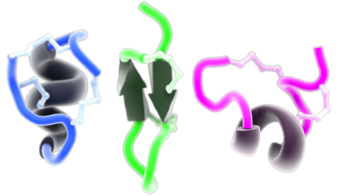
Typical 3D NMR structures of disulfide-rich venom peptides Venoms comprise a highly complex cocktail of bioactive peptides evolved to paralyze prey and defend against predators. Homology of prey/predator receptors to human receptors render these venom peptides also active on human receptors and they have become a rich source for neurological tools and therapeutics. Our group is involved in the discovery, synthesis and structure-activity relationship studies of these venom peptides with the goal to develop novel probes for neuroscientists as well as therapeutic drug leads.
Oxytocin and Vasopressin Research
The oxytocin and vasopressin signalling system regulates many fundamental physiological processes such as reproduction, water balance, cardiovascular responses and complex social behaviour. It is also a high-profile target for autism, schizophrenia, stress, depression, anxiety, cancer and pain. Our group is particularly interested in creating a complete molecular toolbox to study this signalling system as well as in discovering novel therapeutic leads for autism, pain, gastrointestinal disorders and breast cancer.
Neuropeptides and long-term Memory Formation
Memory is probably the single most important brain process that defines our personality and gives us the sense of individuality. Emotional events often cause the generation of strong memories that exist for many years, yet the underlying mechanisms are still poorly understood. Neuropeptides are key players in regulating emotions and have been associated with long-term memory formation. Our group is involved in the development of advanced molecular probes to understand how neuropeptides can influence long-term memory formation.
Gastrointestinal Disorders
The gastrointestinal epithelium is a major physical barrier that protects us from diverse, and potentially immunogenic or toxic content. A damaged epithelium results in increased permeability to such content, thus leading to inflammation, uncontrolled immune response, and diseases, such as irritable bowel syndrome and inflammatory bowel disease that affect 10-15% of the population. Our group is involved in the identification and validation of novel drug targets and therapeutic strategies that can protect or repair this important barrier in order to prevent or treat such disorders.
Engagement and impact
Dr Muttenthaler is internationally recognised for his expertise in venom peptide drug discovery, neuropeptide research and his pioneering methods in peptide chemistry. His work focuses on developing tools that facilitate basic fundamental research as well as drug discovery. He recently received the prestigious Miklós Bodanszky Award for his outstanding contributions for peptide-based drug research.
Peptides are key mediators in many biological functions and understanding of their interaction with target proteins is fundamental to unravel the underlying mechanism of diseases. Over the years, an increasing number of bioactive peptides from animals, plants, and bacteria have been characterised, with the overwhelming realisation that these molecules often show better therapeutic performance than their human counterparts, particularly in terms of in vivo stability.
Our main research efforts situated in this field of Chemical Biology focus on the exploration and translation of these vast and untapped natural libraries towards the development of useful research tools and therapeutics. Solid-phase peptide synthesis, the main tool to access these compounds, is a powerful technology for the assembly and chemical modification of these highly chiral and structurally complex peptides. This complexity is also responsible for their remarkable selectivity and potency as well as for their low side effect profile observed in the clinic.
Connect
Pages
Strawberry DNA extraction activity
Extract and view DNA from a strawberry using common household ingredients.
Get started
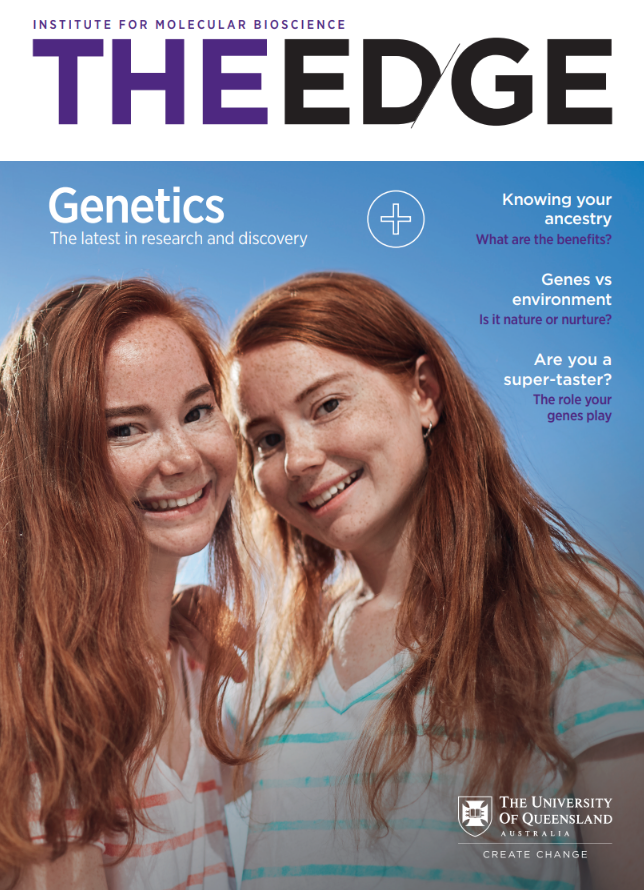
The Edge: Genetics
People have known for thousands of years that parents pass traits to their children, but it is only relatively recently that our technology has caught up to our curiosity, enabling us to delve into the mystery of how this inheritance occurs, and the implications for predicting, preventing and treating disease.
Subscribe to our newsletter
Get the latest research straight to your inbox.
Stay up-to-date as we answer questions about hot topics, and share the latest news at IMB, Australia’s #1 research institute.
General enquiries
+61 7 3346 2222
imb@imb.uq.edu.au
Media enquiries
IMB fully supports UQ's Reconciliation Action Plan and is implementing actions within our institute.
Support us
Donate to research
100% of donations go to the cause