

Get the latest research to your inbox
- Your foot and a cow’s hoof may look very different, but 55 million years ago, both had five toes.
- Queensland researchers are one step closer to printing 3D human kidney tissue thanks to a partnership between The University of Queensland and a US biotechnology company.
- A distinctive genetic "signature" offers new hope for developing a rapid, affordable diagnostic test for the hundreds of thousands of children infected with tuberculosis each year.
- A University of Queensland researcher will explain how she is using organoids, lab-grown models of human organs, to better understand kidney disease in a live public webcast and question time at 7am AEST Wednesday April 16.
- Australian researchers have identified a biochemical key that alerts immune cells to the presence of bacteria and fungi, which could lead to new ways of diagnosing and treating diseases such as inflammatory bowel disease, peptic ulcers and even infections like tuberculosis.
- Cone snails change "weapons", depending on whether they are hunting or defending themselves, researchers from The University of Queensland have discovered.
- Researchers have developed a new method for rapidly measuring the level of antibiotic molecules in the blood and how they work against bacteria, paving the way for personalised treatments for bacterial diseases.
- The discovery of a Stone Age man with the genes for blue eyes and dark skin has revealed that blue eye colour likely spread through the European population before fair skin.
- University of Queensland researchers have discovered a protein in cells that could block the escape route of potentially cancerous cells and stop them spreading to other parts of the body.
Pages
Strawberry DNA extraction activity
Extract and view DNA from a strawberry using common household ingredients.
Get started
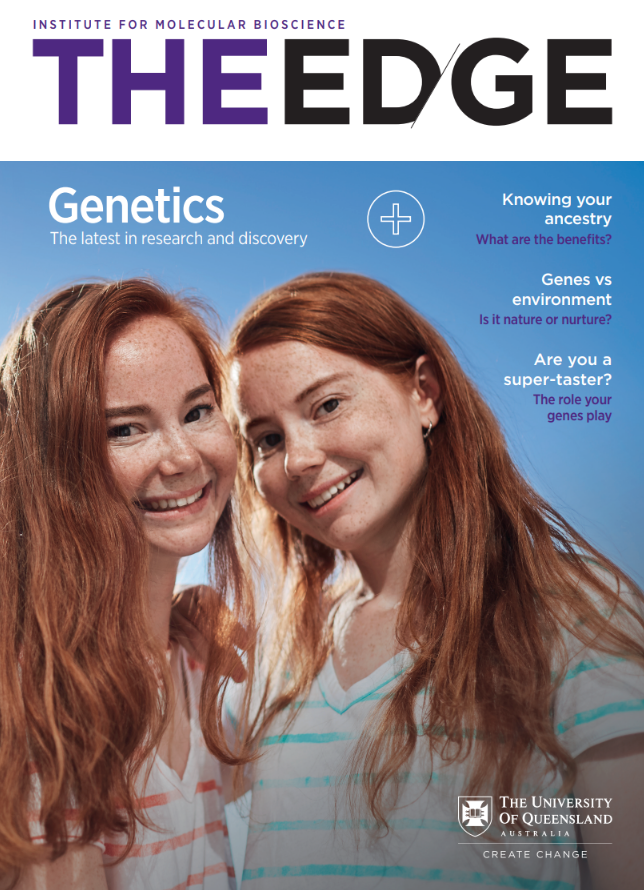
The Edge: Genetics
People have known for thousands of years that parents pass traits to their children, but it is only relatively recently that our technology has caught up to our curiosity, enabling us to delve into the mystery of how this inheritance occurs, and the implications for predicting, preventing and treating disease.
Subscribe to our newsletter
Get the latest research straight to your inbox.
Stay up-to-date as we answer questions about hot topics, and share the latest news at IMB, Australia’s #1 research institute.
General enquiries
+61 7 3346 2222
imb@imb.uq.edu.au
Media enquiries
IMB fully supports UQ's Reconciliation Action Plan and is implementing actions within our institute.
Support us
Donate to research
100% of donations go to the cause