
A caterpillar that keeps eating while being consumed from within. An insect that survives just long enough to protect the parasite that will kill it. A host body transformed into a living “mummy” to shelter developing young.
You’d be forgiven for thinking you had wandered into the pages of a horror novel rather than the next discovery in agriculture and biotechnology.
These outcomes are not fiction. They are everyday survival strategies of parasitoid wasps, tiny insect engineers that have evolved an extraordinary ability to take control of other organisms with astonishing precision.
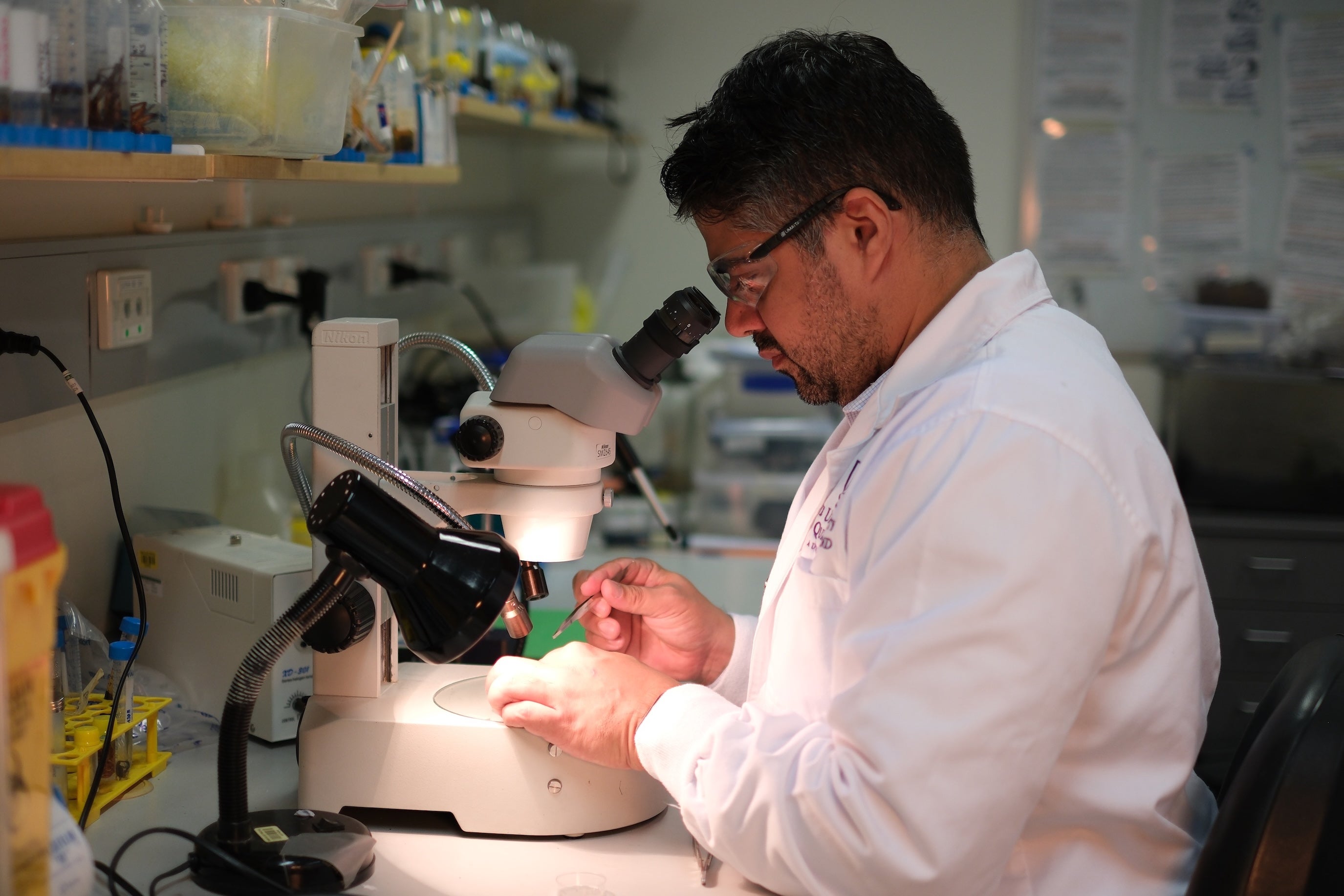 Their bizarre biology has captivated researchers at The University of Queensland's Institute for Molecular Bioscience (IMB), including Dr Ciro Pedro G. Pinto and Dr Andrew Walker, who are uncovering how these wasps manipulate their hosts at the molecular level and what that could mean for the future of biotechnology, agriculture and medicine.
Parasitoid wasps are unlike typical parasites. Rather than simply living off their hosts, their offspring ultimately kill them. But before that happens, something extraordinary takes place.
Using a sophisticated cocktail of bioactive molecules, parasitoid wasps can suppress immune systems, redirect metabolism, alter development and even influence behaviour. Their hosts are not merely infected, they are biologically reprogrammed.
Some species allow their hosts to continue feeding and growing while nourishing the developing wasp larvae inside them. Others rapidly immobilise their hosts, transforming them into protective "mummies" that shield the next generation from predators and the environment.
Every strategy is the product of millions of years of evolution, resulting in molecular tools of extraordinary precision.
Dr Ciro Pinto's interest in parasitoid wasps began with their role in nature, but it was their biology that captured his attention.
"What fascinates me most about parasitoid wasps is their extraordinary ability to manipulate the biology of other organisms. Despite their small size, they have evolved sophisticated mechanisms to alter their hosts’ immunity, development, and behaviour, ensuring the survival of their offspring.
My interest began with their importance in biological control, as these insects play a crucial role in naturally regulating agricultural pests and promoting sustainable agriculture. However, I became particularly fascinated by the molecular mechanisms behind their interactions with hosts. As my research progressed, I realised that parasitoid wasps are not only valuable biological control agents but also a largely unexplored source of bioactive molecules," Dr Pinto said.
What makes these insects particularly exciting for scientists is that the same molecules they use to control their hosts could inspire entirely new technologies.
Researchers are discovering compounds that can selectively suppress insect immune systems, protect against microbial infection and influence fundamental biological processes. These natural molecules could one day help develop more targeted and environmentally friendly pest control strategies, provide templates for new antimicrobial compounds or even inform the design of future therapeutics.
Despite their incredible diversity, scientists have only scratched the surface of what parasitoid wasps have to offer. Tens of thousands of species remain largely unexplored, representing a vast and largely untapped library of bioactive molecules waiting to be discovered.
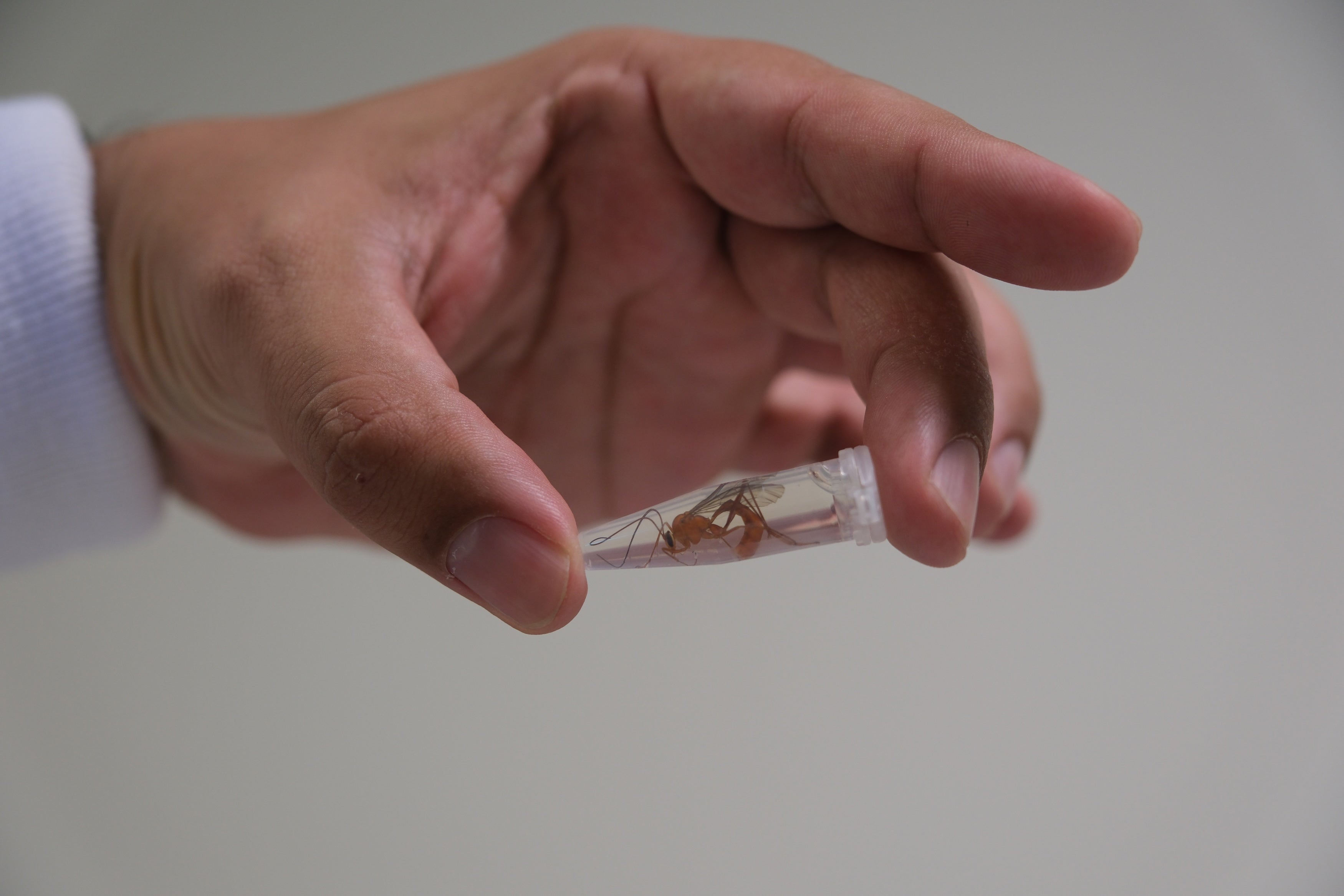 "These insects are already widely recognised for their importance in biological control, but their potential goes far beyond regulating pest populations. Their venoms and other secretions contain proteins and peptides capable of interfering with highly specific biological processes, making them an exciting source of compounds for biotechnology.
Although much remains to be explored, these molecules could inspire the development of novel bioinsecticides, antimicrobial agents, and other bioactive compounds. I believe we are only beginning to uncover the biotechnological potential of parasitoid wasps, and that is what makes this research particularly exciting."
What begins as a story of zombies, mummies and mind-controlling insects quickly becomes something much bigger – a reminder that some of nature's strangest survival strategies may hold the key to solving some of our biggest scientific challenges.
Read the full review in Insect Molecular Biology.


