
Turning research discoveries into better treatments and diagnostic tools takes more than a promising idea. It takes funding and support to help move research forward.
IMB’s annual Inflazome Translational Award and Ignite Innovation Award pitch night was held on Wednesday, 7 October, showcasing IMB researchers addressing important health challenges.
The IMB Inflazome Translational Award was established following the success of Inflazome, an IMB spin-out company, and helps researchers reach critical translational milestones and accelerate progress towards real-world applications. The Ignite Innovation Award recognises research with strong potential to benefit humanity and reflects the role of philanthropy in supporting research with the potential for meaningful impact, made possible by donors.
The pitch night showcased four research projects exploring new possibilities in health and medicine:
Dr Sabrina Sofia Burgener – From Signal to Stratification: validating an inflammasome-based diagnostic for chronic liver disease
Dr David Eagles – Development of a non-addictive analgesic for the treatment of endometriosis-associated pelvic pain
Dr Daniela Rojas-Azofeifa – Accelerating development of troponin-modulating macrocyclic peptides for tunable control of muscle function
Dr Solal Chauquet – A non-invasive RNA-based viability test to improve liver transplant outcomes
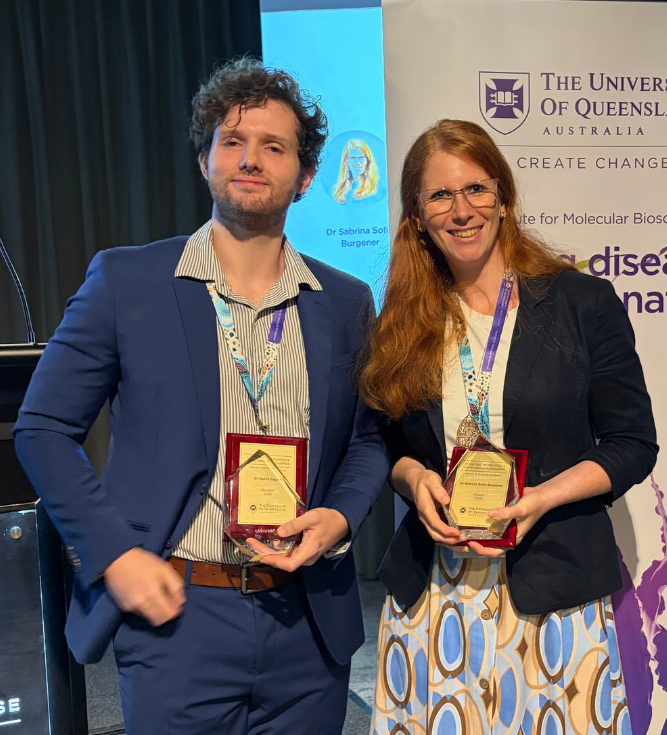 The four projects highlighted the different ways IMB researchers are working to address important questions in health and medicine.
Dr David Eagles received the $40,000 Ignite Innovation Award, and Dr Sabrina Sofia Burgener received the $125,000 IMB Inflazome Translational Award. For David and Sabrina, the awards mark an exciting next step in research with the potential to make a difference. They reflect on their work and what it takes to move an idea beyond the lab.
 Dr David Eagles - Development of a non-addictive analgesic for the treatment of endometriosis-associated pelvic pain
What initially interested you in this area of research?
Endometriosis has been of particular interest to us as it is a hugely prevalent condition (1 in 6 adult women in Queensland) with minimal effective treatments. 70% of women with endometriosis suffer debilitating chronic pelvic pain which is not adequately addressed by current treatments.
What difference do you hope your research could make in the future?
The goal of our research is to make a purpose-designed painkiller for endometriosis with better efficacy and less side-effects than current treatments. Given the difficulty of obtaining an endometriosis diagnosis, an ideal therapeutic would be an over-the-counter oral tablet that can effectively treat the chronic pelvic pain suffered by women with endometriosis.
How will this award help your research progress towards real-world impact?
The IGNITE innovation award will allow us to further our preclinical development, we are aiming to test our lead candidate in two mouse models of endometriosis representing an early and a late stage of disease. This will allow us to generate critical proof-of-concept efficacy data needed to advance our program to the next stage of translational development.
What do you see as the biggest barriers to advancing research in your field?
The biggest barrier for endometriosis research and women’s health research in general is a lack of attention and subsequently a lack of funding.
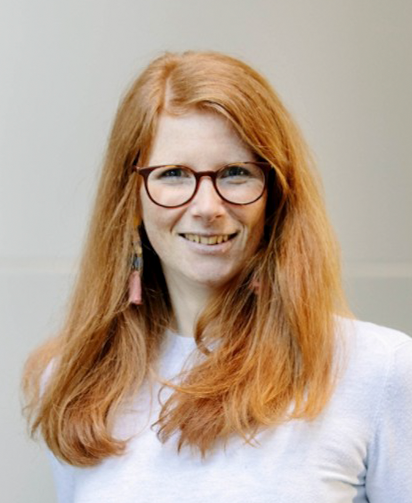 Dr Sabrina Sofia Burgener – From Signal to Stratification: validating an inflammasome-based diagnostic for chronic liver disease
What initially interested you in this area of research?
I’ve always been fascinated by inflammation, the body’s alarm system. It protects us from infection, but if it is not switched off correctly, it can damage our own organs. In people living with rare inflammatory diseases, you can see how much harm our immune system can cause, and how much it matters to patients to have answers. In chronic diseases such as fatty liver disease, which affects around one in three Australians, the same inflammatory mechanism drives disease. Both diseases lack a reliable way to diagnose them.
What difference do you hope your research could make in the future?
Fatty liver disease usually has no symptoms, so most people only find out once the damage is serious and can’t be reversed. In its early stages, it can be turned around. I would like to develop a simple blood test, with no biopsy and no specialist referral, that tells a GP early on who is at risk and how active the disease is. New medicines for liver scarring have only just been approved, but current tests often can’t tell who needs them. Our test aims to help the right people get the right treatment at the right time.
How will this award help your research progress towards real-world impact?
Many promising discoveries stall between the lab and the clinic because that step is hard to fund. This award helps us take our test from a research tool to a preclinical test. The Inflazome Translational Award allows us to test our research tool in a new, independent group of patients, establish a standard, scalable format, and work with UniQuest to protect the invention and plan its clinical translation. It also lets us talk with doctors and patients, so we can build applications beyond the current scope.
What do you see as the biggest barriers to advancing research in your field?
Most liver tests in use today are prognostic markers: they estimate how much scarring has built up and how likely someone is to get sicker. That is valuable, but it doesn’t tell us what is driving a person’s disease, or who is likely to benefit from a particular treatment. What’s missing is a companion diagnostic, a test developed alongside a medicine to identify the people it is most likely to help. This matters now because the first medicines for fatty liver disease have been approved and more are moving through clinical trials.


